EventAcross the pillars
The Three Communities
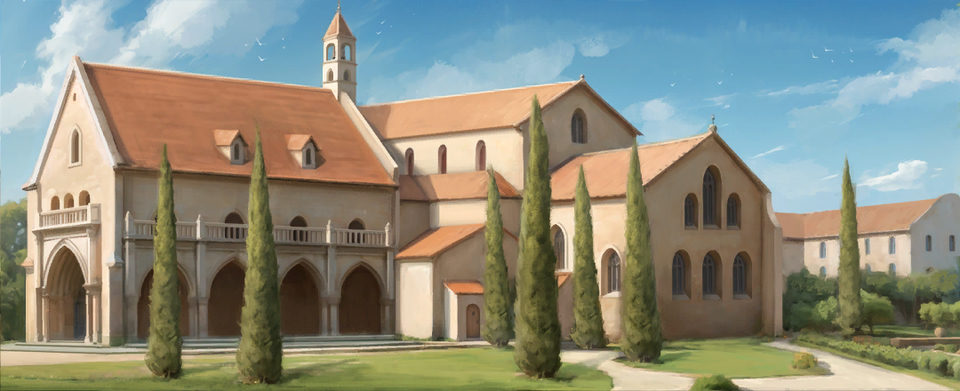
In our towns, church bells, the mu'aḏḏin's call, and the Sabbath candle all mark the same hours on the same streets, and have done so for generations. Mudéjar artisans, Jewish moneylenders and physicians, and Christian burghers share markets, workshops, courtyards, and often bitter disputes, all held together under a fragile convivencia that predates our grandfathers and has outlasted wars, plagues, and the shifting moods of the kings before us. Councilors press us daily for a firmer hand; the aljamas press just as hard for the opposite. How closely should the crown watch over the terms on which the three communities are permitted to live side by side?
Fired by
- yearly_country_pulseOn ActionFrom random events 2 · right away
Trigger
- Has DLC:
 Across the Pillars
- Religion:
 Catholicism
- CultureBelongs to the Iberian Culture Group
- None of
- Any in global list
- Variable:
d009_convivencia_intro_locations - Owner: Root
- Variable:
- Has presence in: Iberia
- Religion population in country (
 Sunnism) > 0
- Religion population in country (
 Judaism) > 0
Exact conditions
- IberiaOrdered ownable location in regionwhereOwner: Root
- Add to global variable list
- Name:
d009_convivencia_intro_locations - Target: Target location
- Name:
- IfOwns Toledo
- Set variable
- Name: d009_convivencia_courts_delay
- Years
1015
Exact script
 Burghers gains +10% Estate Satisfaction
- +10 towards
 Decentralization
- If
- The
 Golden Century is currently happening
- Has Global Variable: battle_for_the_strait_winner_country
- This: global_var:battle_for_the_strait_winner_country
ThenEuropean Dominance: 2.5- European Dominance: ValueGolden CenturyChange variable
- Name: European Dominance
- Add: value
- gc_mirror_dominance_to_country↗Thenglobal_var:battle_for_the_strait_winner_country
- Set variable
- Name: European Dominance
- Value: Golden Century › European Dominance
- Set variable
- Name: Colonial Dominance
- Value: Golden Century › Colonial Dominance
- Set variable
- The
- If
- The
 Battle for the Strait is currently happening
 Granada Exists
- Is or was
 Castileor
 Morocco
Thenchange_influence_over_granada_effect: -2Influence over Granada shifts Value toward Morocco↗Battle for the Strait- Change variable
- Name: Influence over Granada
- Add: -2
- Clamp variable
- Name: Influence over Granada
- Min: -100
- Max: 100
- The
- Target locationThe Muslim and Jewish communities of Target Location grow more settled under our rule
Exact script
 Clergy gains +10% Estate Satisfaction
- +10 towards
 Centralization
- If
- The Golden Century is currently happening
- Has Global Variable: battle_for_the_strait_winner_country
- This: global_var:battle_for_the_strait_winner_country
ThenEuropean Dominance: −2.5- European Dominance: ValueGolden CenturyChange variable
- Name: European Dominance
- Add: value
- gc_mirror_dominance_to_country↗Thenglobal_var:battle_for_the_strait_winner_country
- Set variable
- Name: European Dominance
- Value: Golden Century › European Dominance
- Set variable
- Name: Colonial Dominance
- Value: Golden Century › Colonial Dominance
- Set variable
- The
- If
- The Battle for the Strait is currently happening
- Granada Exists
- Is or was CastileorMorocco
Thenchange_influence_over_granada_effect: +2Influence over Granada shifts Value toward Morocco↗Battle for the Strait- Change variable
- Name: Influence over Granada
- Add: 2
- Clamp variable
- Name: Influence over Granada
- Min: -100
- Max: 100
- The
- Target locationThe Muslim and Jewish communities of Target Location grow uneasy under our rule
Exact script
Requires 10
Situations
- Battle for the StraitOption 1, Option 2
- Golden CenturyOption 1, Option 2
Religions
- CatholicismTrigger
- JudaismAs soon as it happens, Option 1…
- SunnismOption 1, Option 2…
Culture Groups
- IberianTrigger
DLCs
- Across the PillarsTrigger
Triggers 1
 The Tránsito SynagogueAs soon as it happens
Changes 3
Societal Values
- Centralization vs DecentralizationOption 1, Option 2
References 2
Mentions 2
Religions
- JudaismDesc
Religion Groups
 ChristianityDesc
Triggered by 1
- yearly_country_pulseRandom events 2
Scripting 14
Requires 1
- battle_for_the_strait_winner_countryOption 1, Option 2
Grants 3
- d009_convivencia_courts_delayAs soon as it happens
- European DominanceOption 1, Option 2
- Influence over GranadaOption 1, Option 2
Uses 3
- change_influence_over_granada_effectvalue = -2 (+1)Option 1, Option 2
- event_illustration_estate_effectbackground = estate_type:clergy_estate · foreground = estate_type:burghers_estateAs soon as it happens
- gc_change_european_dominancevalue = 2.5 (+1)Option 1, Option 2
References 7
Script Values
- estate_satisfaction_mild_bonusOption 1, Option 2
- gc_dominance_weak_bonusOption 1
- gc_dominance_weak_penaltyOption 2
- pop_satisfaction_mild_bonusOption 1
- pop_satisfaction_mild_penaltyOption 2
- societal_value_move_to_leftOption 2
- societal_value_move_to_rightOption 1
type = country_event
title = d009_convivencia.1.title The Three Communities
desc = d009_convivencia.1.desc In our towns, church bells, the mu'aḏḏin's call, and the Sabbath candle all mark the same hours on the same streets, and have done so for generations. Mudéjar artisans, Jewish moneylenders and physicians, and Christian burghers share markets, workshops, courtyards, and often bitter disputes, all held together under a fragile convivencia that predates our grandfathers and has outlasted wars, plagues, and the shifting moods of the kings before us. Councilors press us daily for a firmer hand; the aljamas press just as hard for the opposite. How closely should the crown watch over the terms on which the three communities are permitted to live side by side?
outcome = neutral
historical_info = d009_convivencia.1.historical_info Convivencia, meaning coexistence, is the term historians use for the centuries in which Christians, Muslims, and Jews lived side by side across medieval Iberia under varying degrees of tolerance, particularly in cities like Toledo, Sevilla, and Zaragoza. It was never full equality, non-Christians paid special taxes and lived under real restrictions, but it allowed a level of cultural and intellectual exchange that produced, among other things, the great translation schools of Toledo.