
Decision
Bibliotheca Corviniana
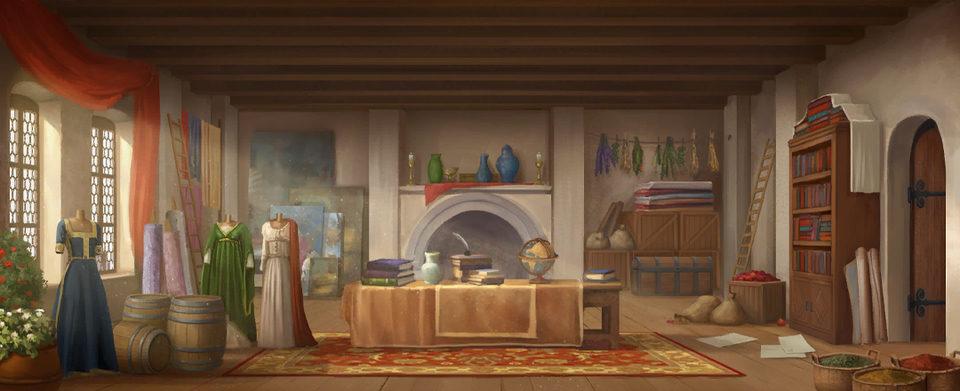
As the Renaissance spreads across the continent like a wildfire, igniting the flames of knowledge and cultural rebirth, our Court Title has been abuzz with the possibilities it brings. Scholars, artists, and thinkers have begun to gather in our cities, inspired by the new wave of ideas sweeping through Europe. A suggestion was brought up - to construct a grand library in Capital - one that would attract scholars from far and wide, and make Hungary a bastion of the Renaissance. Funding such an ambitious project, however, would be quite expensive. Shall we invest in the building of Bibliotheca Corviniana?
Potential↗
Current Age is at least Discovery or later
↗It is NOT the  Traditionsor
 Renaissance
TraditionsorRenaissanceAllow
CapitalHas  Renaissance
Exact conditions
Effect
- Set variable: unlocked_bibliotheca_corviniana
- CapitalConstruct building: Building Type:
 Bibliotheca Corviniana
- Gain +2.5 Government Power
- Gain +10 Prestige
Exact script
Effect
+20 towards  Innovative
Exact script
Requires 2
Ages
 DiscoveryPotential
Institutions
- RenaissanceAllow
Belongs to 1
- Country SpecificDecision category
Grants 1
- Bibliotheca CorvinianaOption 1
Changes 1
 Traditionalist vs InnovativeOption 2
References 2
Buildings
- Bibliotheca CorvinianaOption 1
Countries
 HungaryTags
Mentions 2
Institutions
- RenaissanceDesc
Buildings
- Bibliotheca CorvinianaDesc, Name
Scripting 5
Grants 1
- unlocked_bibliotheca_corvinianaOption 1
Uses 1
- current_age_or_laterage = age_3_discoveryPotential
References 3
- government_power_weak_bonusOption 1
- prestige_mild_bonusOption 1
- societal_value_large_move_to_rightOption 2
historical_info = hun_bibliotheca_corviniana_decision.historical_info Matthias Corvinus, nicknamed the Renaissance King, was a great patron of arts and science. During his reign, Hungary became the first country outside of Italy to embrace the Renaissance, and Bibliotheca Corviniana became one of his largest contributions to the cultural revival in Hungary. It served as a hub for scholarly exchange and played a pivotal role in the dissemination of knowledge throughout the country. Scholars from across the continent were drawn to the library, contributing to the intellectual vibrancy of the Renaissance. It served as a symbol of the Renaissance's intellectual fervor in Hungary and the power of patronage in cultivating knowledge and innovation.
only_once = yes