Event
Treatise on Light
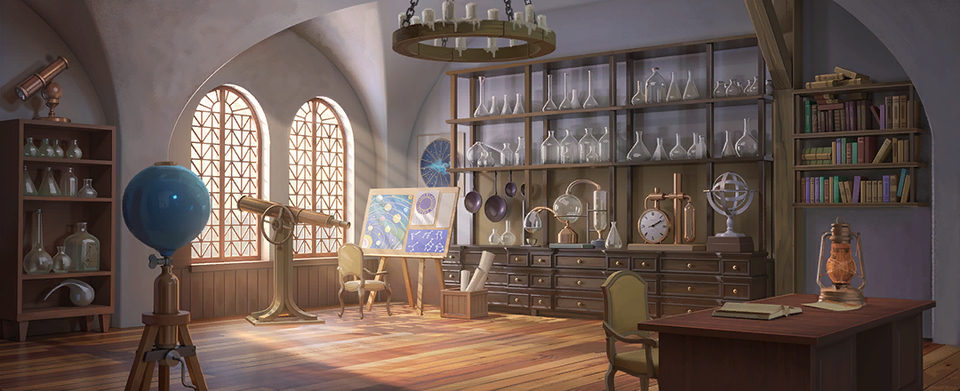
In Current Year, foundational work has been undertaken, describing the inverse-square law of light intensity, principles of reflection, and their astronomical implications. Further contributions advance our understanding of refraction and reflection, and pivotal investigations delved into the nature of light, color, and optical properties.
 Scientific RevolutionInstitutiontrigger
Definitionin_game/events/institution_events.txt:2819
2820type = country_event
2821title = institution_events.138.title Treatise on Light
2822desc = institution_events.138.desc In Current Year, foundational work has been undertaken, describing the inverse-square law of light intensity, principles of reflection, and their astronomical implications. Further contributions advance our understanding of refraction and reflection, and pivotal investigations delved into the nature of light, color, and optical properties.
2823outcome = neutral
2824trigger = {
2828trigger = "any_cabinet_character = { adm >= 60 } num_of_advances_researched >= tech_level_to_advances_20"
2829type = optics
}
}
2833image = "gfx/interface/illustrations/institutions/scientific_revolution.dds"
2834immediate = {
2835random_owned_non_rural_location = {
2837save_scope_as = target_location
}
}
2849historical_info = institution_events.138.historical_info In the early 17th century, Johannes Kepler (1571-1630) delved into a comprehensive exploration of optical phenomena. The outcome of his tireless investigation, 'Astronomiae Pars Optica' (The Optical Part of Astronomy), was presented to the emperor in 1604. This work laid down the foundation of modern optics, elucidating principles like the inverse-square law of light intensity and the intricacies of reflection by flat and curved mirrors. Kepler's pioneering research also ventured into the human eye, where he recognized the inverted projection of images on the retina.
In 1610, Kepler extended his contributions to telescopic lenses, meticulously exploring the properties of double-convex and double-concave lenses. This research culminated in his work 'Dioptrice,' published in 1611. Kepler's treatise not only elucidated the theoretical foundations of converging and diverging lenses but also introduced the astronomical or Keplerian telescope, employing two convex lenses to achieve higher magnification. His groundbreaking optical work greatly influenced the development of telescopes, shaping the trajectory of astronomical observation and revolutionizing the world of optics.
In 1610, Kepler extended his contributions to telescopic lenses, meticulously exploring the properties of double-convex and double-concave lenses. This research culminated in his work 'Dioptrice,' published in 1611. Kepler's treatise not only elucidated the theoretical foundations of converging and diverging lenses but also introduced the astronomical or Keplerian telescope, employing two convex lenses to achieve higher magnification. His groundbreaking optical work greatly influenced the development of telescopes, shaping the trajectory of astronomical observation and revolutionizing the world of optics.