Event
Chemistry during the Scientific Revolution
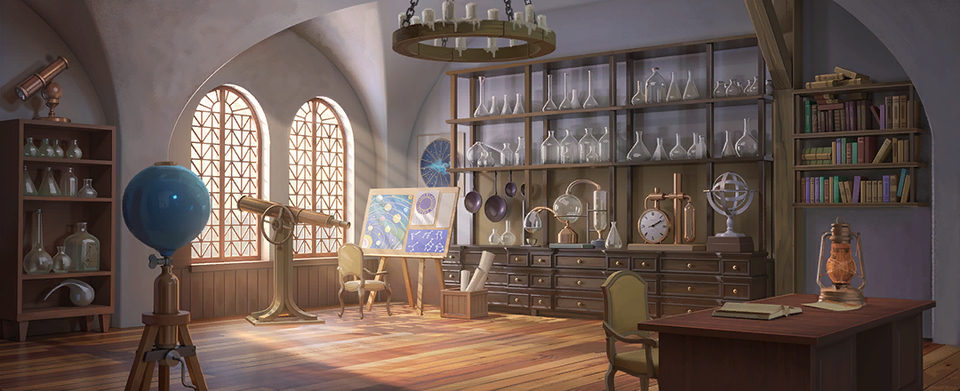
Chemistry has its roots in the ancient arts of alchemy, though, unlike its ancestor, modern chemistry has evolved into a distinct scientific discipline. The chemical philosophy emphasizes the active properties of matter and moves away from mysticism. Practical advancements, particularly in metallurgy, are contributing to this transformation.
 Scientific RevolutionInstitutiontrigger
Definitionin_game/events/institution_events.txt:2718
2719type = country_event
2720title = institution_events.135.title Chemistry during the Scientific Revolution
2721desc = institution_events.135.desc Chemistry has its roots in the ancient arts of alchemy, though, unlike its ancestor, modern chemistry has evolved into a distinct scientific discipline. The chemical philosophy emphasizes the active properties of matter and moves away from mysticism. Practical advancements, particularly in metallurgy, are contributing to this transformation.
2722outcome = neutral
2723trigger = {
2727trigger = "any_cabinet_character = { adm >= 60 } num_of_advances_researched >= tech_level_to_advances_20"
2728type = chemistry
}
}
2732image = "gfx/interface/illustrations/institutions/scientific_revolution.dds"
2733immediate = {
2734random_owned_non_rural_location = {
2736save_scope_as = target_location
}
}
2748historical_info = institution_events.135.historical_info Robert Boyle (1627-1691), an Anglo-Irish natural philosopher, chemist, and physicist, is hailed as a pivotal figure in the emergence of modern chemistry and the development of experimental scientific methodology. His renowned work, Boyle's law, elucidates the inverse relationship between gas pressure and volume when temperature is held constant within a closed system. Among his notable contributions, "The Sceptical Chymist" stands as a cornerstone in the realm of chemistry. While deeply devoted to his Anglican faith, Boyle's scientific approach aligns with Francis Bacon's principles in the Novum Organum, emphasizing empirical evidence and eschewing unwarranted hypotheses. Boyle's comprehensive exploration extended to diverse scientific fields, including physics, sound propagation, freezing water's expansive force, specific gravities, refractive powers, crystals, electricity, color, hydrostatics, and more. His dedication to chemistry and the pursuit of knowledge led to vital insights into the composition of substances, the nature of elements, and the differentiation between mixtures and compounds. His influential work laid the foundation for the modern understanding of the physical world and scientific inquiry.